A Designer's Review of the Dream Big Create Your Own Story T-Shirt Design
As someone who’s stitched hundreds of custom projects for clients and my own small shop, I always look at a new embroidery file with a practical eye. It’s not about whether the graphic is pretty on screen; it’s about how it will perform as a stitched, tangible product. Today, I’m considering the “Dream Big Create Your Own Story” t-shirt design as a potential asset for real embroidery work.
The First Impression: A Design Built for Motivation
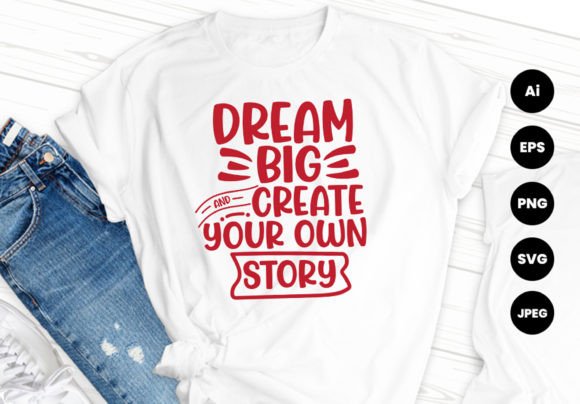
Opening this design, the mood is immediately clear: it’s uplifting and personal. The phrase “Dream Big” anchors the top with a bold, friendly presence, while “Create Your Own Story” flows beneath in a more graceful script. The layout feels balanced and intentional, not just text slapped on a canvas. This visual personality strikes a sweet spot between being inspirational enough for a gift and universal enough for a wide range of customers. It doesn’t feel locked into one specific theme, which is a huge advantage for a craft business.
My first thought was how naturally this would translate into a satin stitch for the main lettering, with perhaps a fill stitch for any subtle background elements if they exist in the source file. The level of detail appears manageable; it doesn’t look overly dense or filled with tiny intricacies that would become a stitching nightmare. This tells me it belongs on projects where the message is the star—things like custom apparel, tote bags, or decor where you want the words to be clean and readable from a few feet away.
Where This Design Thrives in Real Projects
Let’s talk application. I envisioned using this design for a custom embroidered sweatshirt for a graduation gift. The message is perfectly suited for that transition moment. The scale, given the provided PNG dimensions, suggests it can be sized quite large for a sweatshirt back or more modestly for a front pocket area. On a heavyweight cotton tote bag, this design would carry a lovely handmade presentation, adding value to a simple canvas bag. For a small shop owner, this could become a staple on baby items like a keepsake blanket or a simple nursery pillow cover—a sweet, aspirational note for a new beginning.
For crafters selling at fairs or on Etsy, this design is a versatile commercial embroidery asset. It could easily be adapted for:
- An embroidered patch for a backpack.
- A centered design on an apron for a creative cook.
- A subtle, elegant addition to a tea towel in a kitchen set.
- The focal point on a pillow cover for a boutique home goods line.
- Even a cap, if the design is carefully sized and positioned for the curved surface.
Its nature as a “print-ready” graphic with vector formats like Ai, Eps, and SVG means you have clean paths to work from, which is crucial for converting or preparing files for embroidery software, ensuring stitch clarity.
Considerations for Stitching Success
However, no design is perfect for every scenario. Here’s where practical judgment comes in. The script portion, “Create Your Own Story,” with its likely flowing letters, needs attention. On textured fabrics like some sweater knits or on stretchy fabric without proper stabilizer, those delicate curves could lose definition. On dark fabric backgrounds, thread color contrast is paramount; a light, crisp thread would be essential to maintain the motivational feel.
I would be cautious about using this on very small hoop sizes, attempting to miniaturize it for a tiny baby bib, for instance. The detail in the script might become lost or clunky. Similarly, products that will undergo frequent washing, like kitchen towels or everyday t-shirts, need a robust stitch execution—perhaps a slightly denser fill—to ensure longevity, which you’d need to test.
A Real Scenario: Preparing a Holiday Gift Tote
Imagine you’re preparing a personalized tote bag as a holiday gift for a friend starting a new venture. You choose a natural canvas fabric. Using this “Dream Big” design, you’d want to test it on scrap canvas first. Check the stitch density for the larger text areas to ensure it doesn’t pucker the bag. Review how the small connecting points in the script turn out. You’d likely choose a vibrant, confident thread color. Seeing it stitched, you’d assess its visual appeal: does it look encouraging and professional? For a gift, that’s everything. This design, executed well, would absolutely elevate the product’s giftability and perceived value.
How This Design Impacts Your Business and Craft
From a business perspective, a design like this affects more than just the stitch. It influences customer trust and brand consistency. If you’re a creative entrepreneur offering motivational products, using a clean, well-composed design reinforces that your handmade products are thoughtful and high-quality. It helps in buyer engagement—people connect with clear, positive messages. For digital product sellers, offering this as part of an embroidered item in a printable mockup can make your Etsy listings or digital product previews look cohesive and professional.
It’s also a design that can bridge personal and commercial use seamlessly. You could stitch one for a friend’s newborn gift and then, understanding its performance, confidently offer it as a custom option on your small shop merchandise, knowing how it behaves on various fabrics.
Practical Notes Before You Hoop the Fabric
Before running this embroidery file on your machine for a real project, here’s my standard checklist:
- Always test on scrap fabric first, replicating the final project’s texture and weight.
- Check thread color contrast against both light and dark fabric backgrounds. A quick black and white mockup can help judge value contrast.
- Review the stitch density in your software after conversion; adjust if areas seem too sparse or too dense for your chosen fabric.
- Confirm your hoop size can accommodate the design at the size you intend. The provided high-resolution PNG suggests good scalability, but your machine’s capabilities dictate the final size.
- Inspect small details, especially in the script lettering, to plan for any potential stitch adjustments.
- Use proper stabilizer. For woven projects like tote bags or pillow covers, a cut-away might be best; for stretchy t-shirts, a tear-away or specific knit stabilizer.
- Most importantly, confirm licensing. The description states “You can use this t-shirt design for any purpose,” but as a professional, I always recommend verifying this clarity before selling finished items or commercial embroidery projects. Ensure your use aligns with the terms provided.
In conclusion, the “Dream Big Create Your Own Story” t-shirt design presents itself as a versatile, mood-positive graphic with strong potential for a variety of embroidery projects. Its strength lies in its universal message and balanced layout, which translate well into stitched goods that aim to inspire. With mindful preparation and testing for specific applications—particularly around fabric choice and delicate script—it can become a reliable and valuable asset in your embroidery design library, whether for personal gifts or for building your craft business.